11 Story of The Burari Deaths by Muthumudalige Nissanka
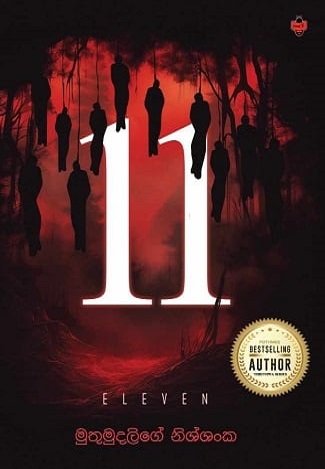
Let Me Tell You a Story — One You May Have Heard Before…
“The Burari Deaths”
It was the first of July, 2018. In Burari, a bustling suburb of Delhi, India, the morning began like any other.
Mr. Gurcharan Singh, a man known for his daily morning walks, left home for his usual routine. Often, he would be joined by Lalit Chundawat, a 45-year-old neighbor and shop owner. The two men shared the habit of early exercise and often exchanged pleasantries as they walked the quiet streets.
But that morning, Lalit was nowhere to be seen.
Gurcharan called his phone—no answer. Thinking little of it, he continued his walk. But on his way home, a strange thought crossed his mind. Lalit’s shop was still closed. That was unusual.
Concerned, Gurcharan decided to check on Lalit at his home—a two-storey building located along a busy street in Burari. Lalit and his family lived on the upper floor. Gurcharan climbed the steps and found the front door slightly open. He called out.
No response.
Worried now, he gathered a few neighbors, and together they stepped inside.
What they saw would soon shock an entire nation.
The house was eerily quiet. As they made their way toward the balcony, they were met with a scene that defied understanding—a chilling image that would become forever etched in India’s modern history.
Ten members of the Chundawat family were hanging by the neck from a mesh iron grill near the ceiling—men, women, and even two young children. Their eyes were covered, their hands bound loosely. Near them, in another room, lay the family’s elderly matriarch, Narayani Devi. She had been strangled, her hands tied.
Eleven lives. Gone.
The media called it “mass suicide.” Others called it “ritualistic.” The Burari house was soon swarmed by journalists, politicians, police forces, and eventually, even a special unit of the Indian army had to be brought in to control the crowd. People from around the country came just to stand outside the house, hoping to understand what had happened inside.
Investigators quickly found the key to the mystery.
Inside a prayer room, they discovered eleven diaries, written over eleven years by two daughters of the family—Priyanka and Nitu. The contents were deeply disturbing. Page after page described spiritual instructions believed to be dictated by Lalit, who claimed he was being possessed by the spirit of his dead father, Bhopal Singh.
Bhopal had died several years earlier, but Lalit told his family that his father still guided them—through him. He wrote down visions, commands, and rituals that had to be followed with absolute faith. The diaries detailed what to do, what not to do, and the punishments that would come from disobedience. The family followed every word religiously.
In their minds, this wasn’t suicide—it was salvation. They believed they were about to be spiritually reborn.
Psychiatrists suggested a shared psychosis—an induced delusion, with Lalit at the center. Others weren’t so sure. Was it madness? Possession? Blind faith? Cult behavior? Or something darker?
Even today, no one knows for sure.
Personally, I didn’t learn about the Burari case until 2022. A friend of mine, Rohan Mirihagalle, mentioned it during a phone call. The moment he described what had happened, I was stunned.
“Can something like this really happen? Can an entire family be led to death… through belief?”
That question wouldn’t let me go.
I began researching. Reading. Watching every documentary and digging into reports from police, psychologists, spiritualists. And then, deep inside me, a thought took root—
“This needs to become a novel.”
Not just a retelling of facts, but a psychological exploration. A story that dives into belief, family, fear, and the fine line between faith and madness.
And so it began—my obsession with understanding Burari. Not just the facts, but the feelings, the silence, the surrender, and the shadows that led eleven people to their end… all under one roof.